

Eyelid Surgery 101: Eye-Opening Facts About Blepharoplasty
If you’ve noticed heavy upper lids, puffiness under your eyes, or a tired look that doesn’t match how you feel, you may be wondering whether eyelid surgery is right for you. Blepharoplasty is one of the most commonly performed facial procedures, but it’s also one of the most misunderstood. To help, we’ve gathered the essential facts about blepharoplasty that patients ask board-certified plastic surgeon, Dr. Shruti Tannan most often.
Questions about recovery, pain, scarring and results are completely normal, and getting clear answers is an important part of making a confident decision. These answers cover the basics, from timing and downtime to what results you can realistically expect. Keep in mind that every patient’s anatomy and goals are different, so a personal consultation is the best way to understand what eyelid surgery can do for you.


Frequently Asked Questions: Get the Facts About Blepharoplasty
What is the difference between blepharoplasty and eyelid surgery?
They are essentially the same procedure. Blepharoplasty is the medical term for eyelid surgery designed to address excess skin and/or changes in the tissues of the upper or lower eyelids.
What age is best for blepharoplasty?
There is no universal best age. Some patients develop significant hereditary eyelid changes at a younger age, while others choose surgery later as skin laxity and other signs of aging become more noticeable.
Is blepharoplasty painful?
Most patients experience discomfort, tightness and swelling rather than severe pain. Your surgical team will provide instructions for managing discomfort during recovery.
Here are before and after photos from Bilateral Transconjunctival Lower Blepharoplasty. Her after photos are 8-months post-surgery.
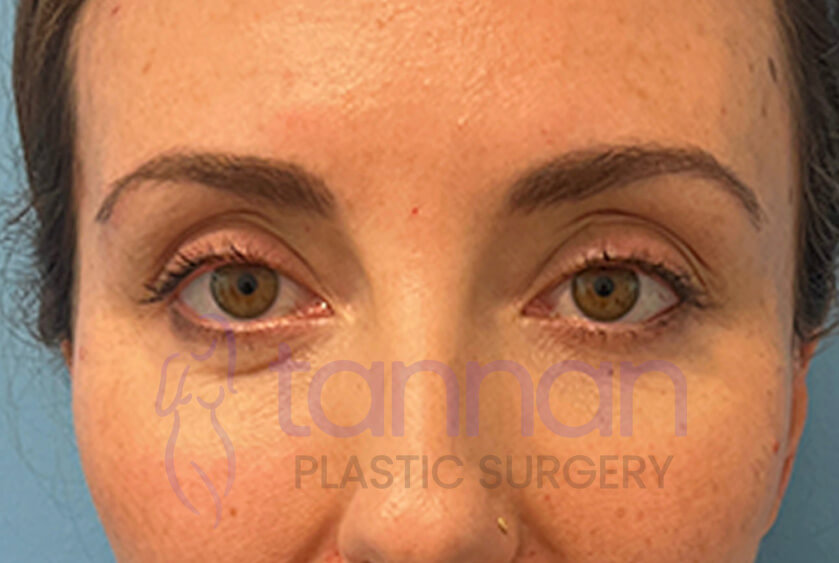
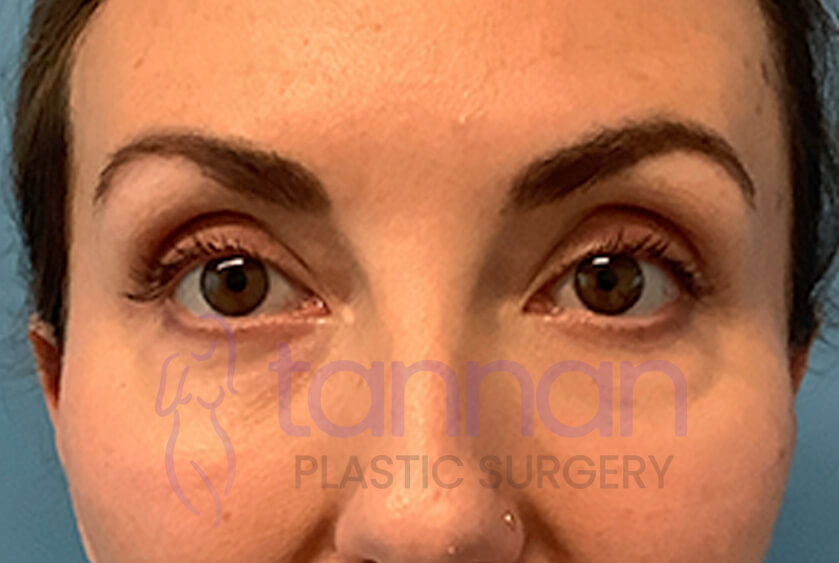
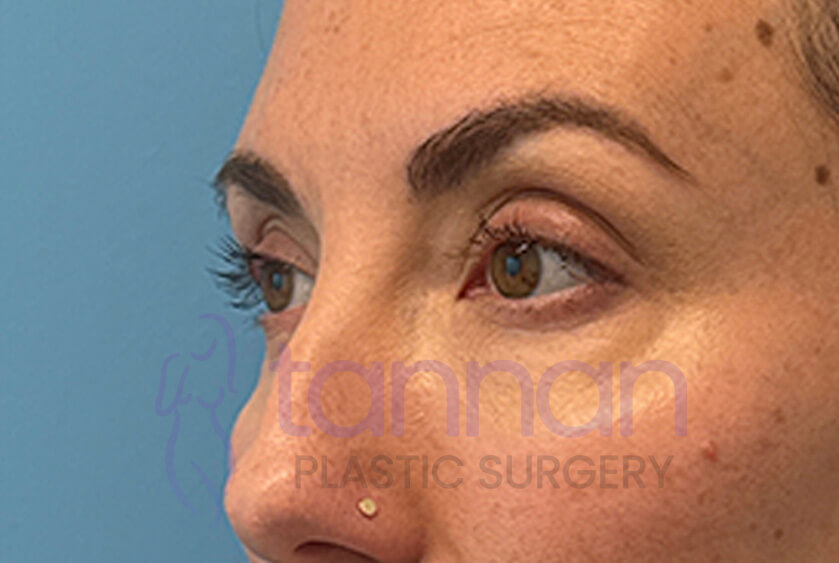
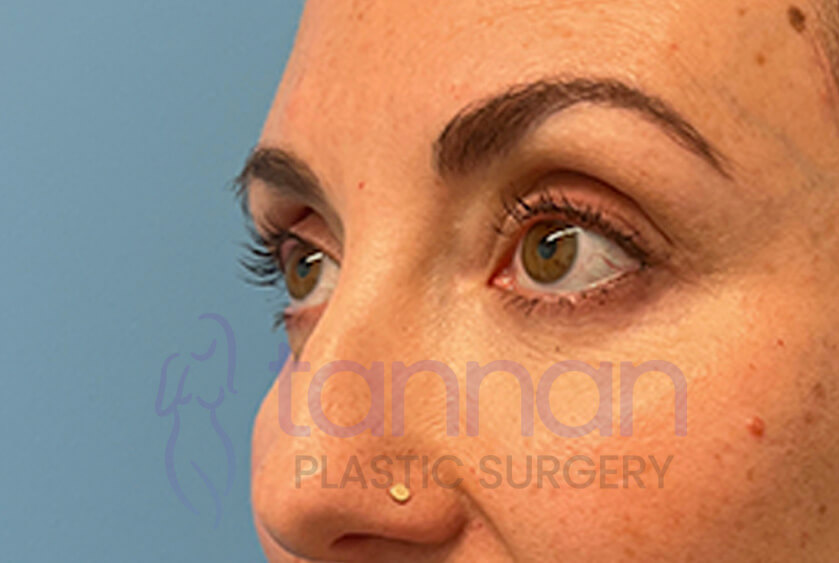
How long do I need to take off work after eyelid surgery?
Many patients plan approximately one to two weeks before returning to work or significant social activities, although the appropriate timeline varies depending on your procedure, occupation and healing.
How long does bruising last after blepharoplasty?
Bruising typically improves substantially during the first couple of weeks, although residual discoloration can last longer in some patients.
Can I wear makeup after eyelid surgery?
Yes, but you will need to wait until your incisions have healed sufficiently and your surgical team gives you clearance.
Can I wear contacts after blepharoplasty?
Contact lenses may need to be avoided temporarily because of swelling, irritation or changes in comfort. Your postoperative instructions will tell you when it is appropriate to resume wearing them.
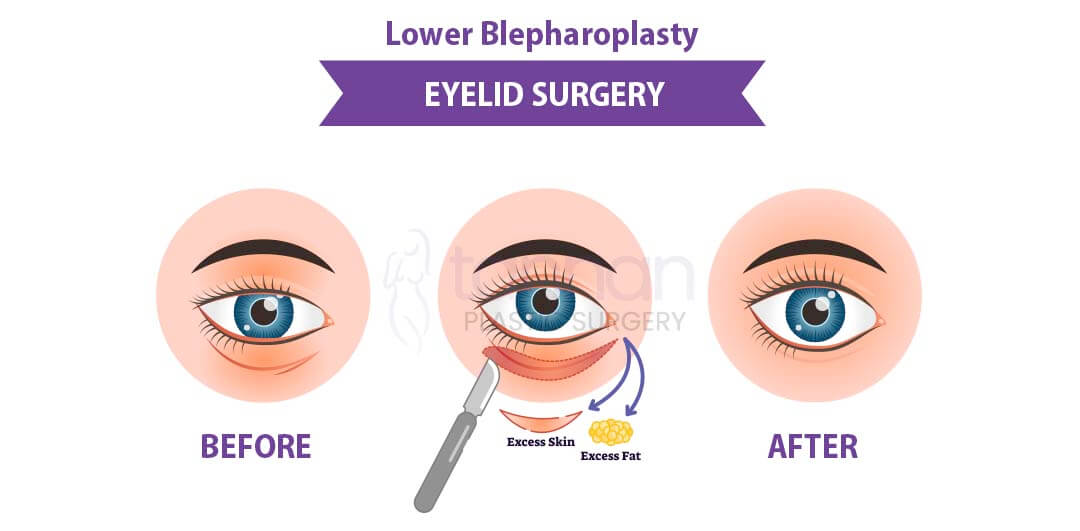
How is a Lower Blepharoplasty performed? This graphic demonstrates the areas targeted by board-certified plastic surgeon, Dr. Shruti Tannan, and what can be expected as the end-result of this procedure.
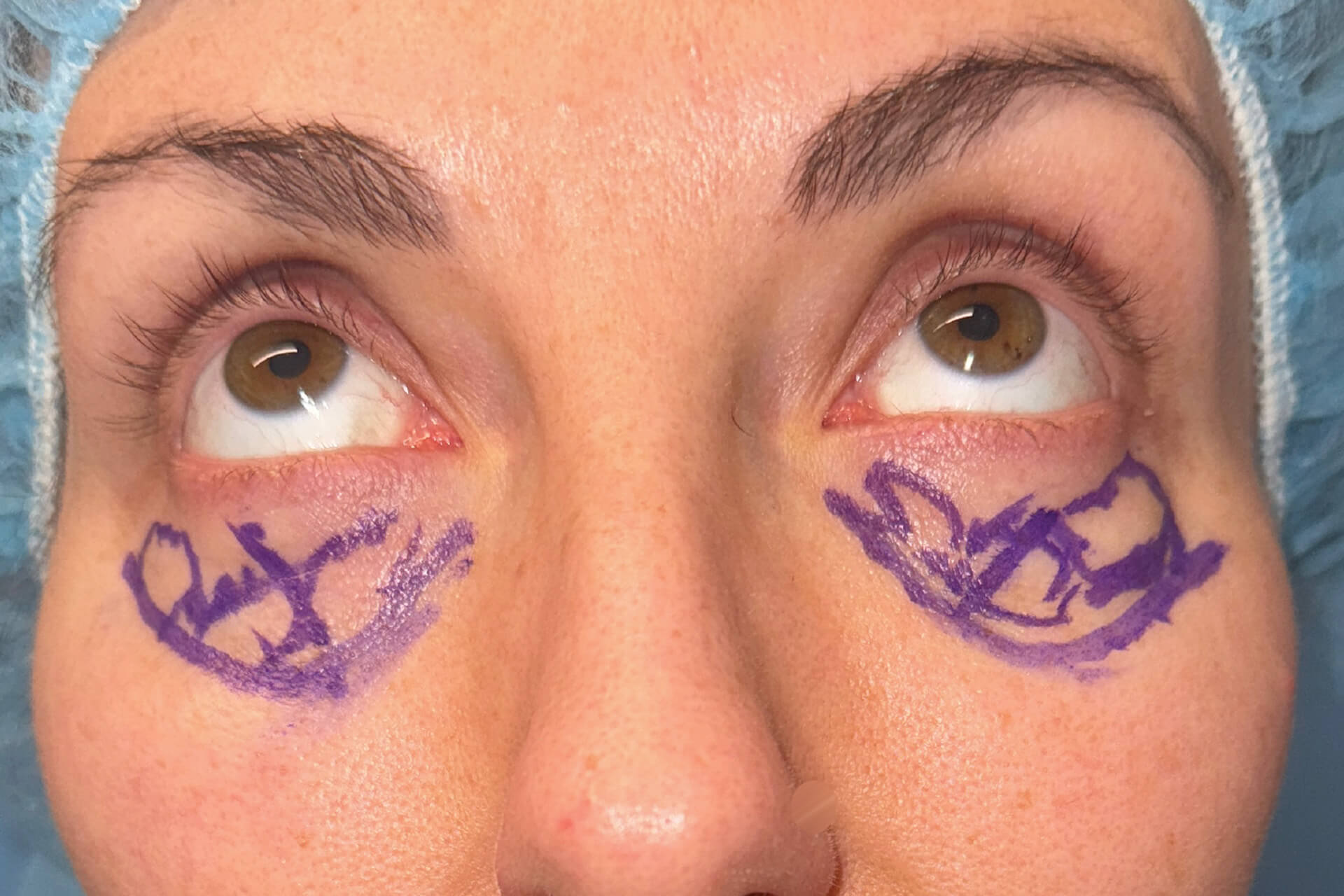
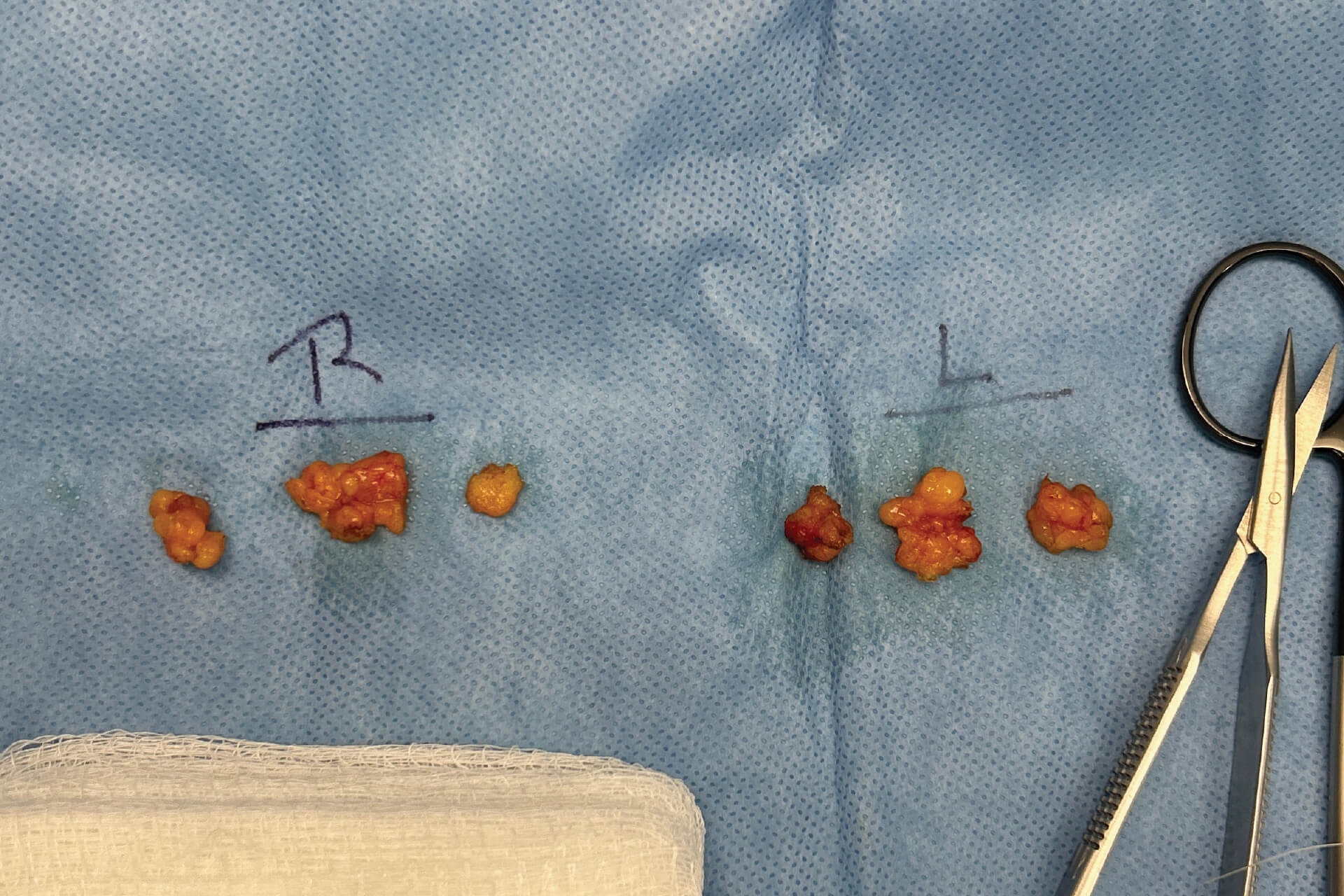
Here are real surgical photos showing the a) target areas marked and b) removed fat compartments during a Bilateral Transconjunctival Lower Blepharoplasty.
Why Choose Tannan Plastic Surgery for Eyelid Surgery?
How soon can I exercise after eyelid surgery?
Strenuous exercise and activities that increase blood pressure are restricted during the early healing period. Your surgeon will provide a timeline based on your procedure and recovery.
Does blepharoplasty remove under-eye bags permanently?
Blepharoplasty can provide long-lasting improvement in under-eye fullness, but aging continues. In appropriate patients, conservative fat repositioning can help improve the transition between the lower eyelid and cheek while maintaining a natural contour.
Can blepharoplasty make my eyes smaller?
The goal of properly planned eyelid surgery is not to make the eyes smaller. Conservative removal and appropriate preservation of eyelid tissues are important for maintaining natural eyelid function and appearance.
Will people know I had eyelid surgery?
Well-planned eyelid surgery is designed to produce a refreshed, natural result. Incisions are placed in discreet locations, and scars generally become less noticeable as they mature.
Is eyelid surgery cosmetic or functional?
It can be either. When excess upper-eyelid skin interferes with the visual field, surgery may be considered functional. When the goal is aesthetic rejuvenation, it is considered cosmetic.
At TPS, eyelid rejuvenation is approached as part of the face rather than as an isolated procedure. Dr. Tannan evaluates your eyelid anatomy, brow position, facial proportions, skin quality and goals before recommending a treatment plan.
The right treatment is the one that addresses your anatomy while preserving your natural expression. For some patients, that means upper or lower blepharoplasty alone. For others, it may include complementary treatments for the brow, skin or surrounding areas.
Understanding the facts about blepharoplasty is a great first step, but no article can replace an in-person evaluation. If you’re ready to explore whether eyelid surgery is right for you, schedule a consultation with Dr. Tannan at Tannan Plastic Surgery. She’ll take the time to understand your goals, answer your questions and help you build a plan for a refreshed, natural-looking result.
If you read the facts about blepharoplasty and are interested in moving forward with eyelid surgery, our all-female team is happy to take care of you in Raleigh at our on-site Surgery Center with an on-site operating room and clinic. If you are coming for your plastic surgery in Raleigh from Cary, Chapel Hill, Durham, Garner, Knightdale, Fayetteville, Greenville, Wilmington or out of state, feel free to call, text or email us. We want to set you up for success in every way – and we are here to help!
Call our Raleigh, NC office today to get started! (919) 797-0996


