
Exercise After Breast Implants: Critical Advice Every Gym Girl Needs
If you are active, love lifting, or consider the gym a non-negotiable part of your lifestyle, you have probably wondered: what happens to my workout routine after breast augmentation? Do I just pause it temporarily or do I need to make a permanent change?
The short answer: it depends on your implant placement. Exercise after breast implants looks very different depending on whether your implants are placed under the muscle (UTM), over the muscle (OTM), or whether you had a breast lift combined with your augmentation. Let me walk you through each scenario so you know exactly what to expect.
And if you are someone who lifts heavy, does push-ups daily, or cannot imagine giving up chest day, please keep reading. This is especially important for you, and ideally something to discuss with your board-certified plastic surgeon before surgery day.

Exercise After Breast Implants Over the Muscle (OTM)
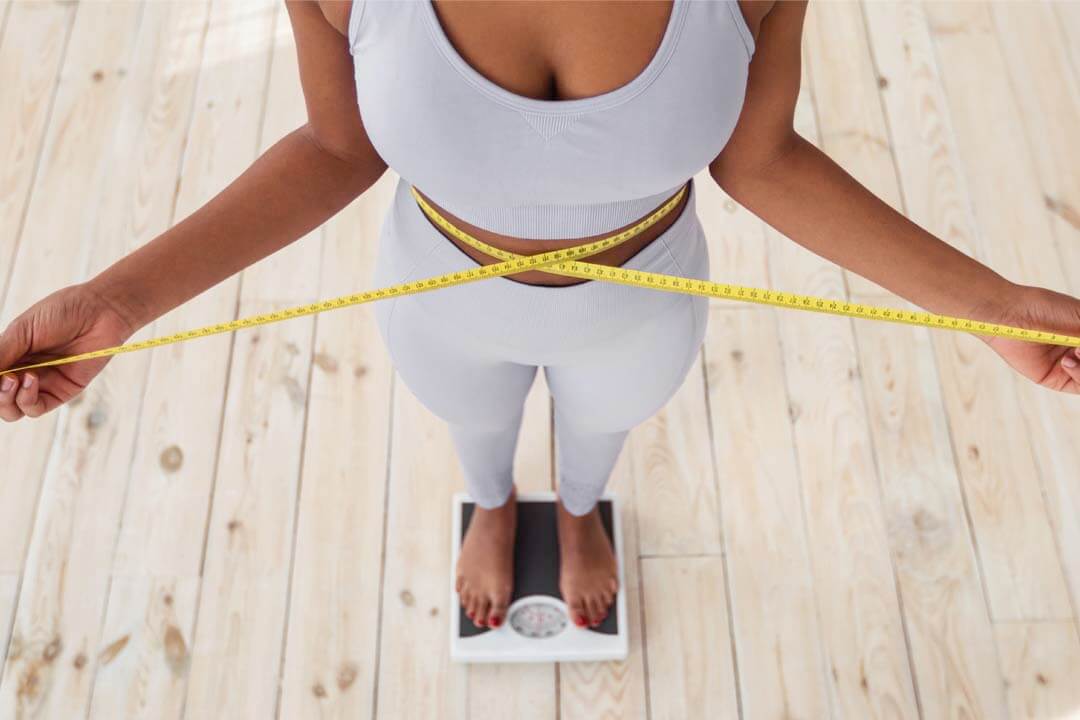
Here is where I get to deliver some genuinely great news for the gym girlies. If you have implants placed over the muscle, also called subfascial or subglandular placement, there are no long-term exercise restrictions after your initial breast implant recovery period.
In my practice, that initial recovery is typically three to four weeks. After that, you are cleared for everything: chest press, pull-ups, chin-ups, push-ups, weightlifting, you name it. No modifications needed.
This is exactly why I tell gym-focused patients that over-the-muscle placement is often the better option for them. Why should you permanently change how you train just to accommodate your implants? With OTM placement, you do not have to. Your muscle is completely untouched, so contracting it does not affect your implant at all.
This is the kind of conversation I love having with patients before surgery. If working out is a significant part of your identity and your mental health, that matters and it should factor into your surgical plan.
Exercise After Breast Implants Under the Muscle (UTM)
When your breast implants are placed behind your pectoralis major muscle, your exercise restrictions after breast augmentation are real and long-term. Here is why: every time you contract your pec major, that implant moves. It shifts to the side, and in dual-plane techniques where the lower edge of the muscle has been released, it can migrate downward and outward. Over time, that changes your results in ways that are really challenging to correct.
After the acute recovery phase (typically four to six weeks), my recommendations for UTM patients include:
- No isolated chest exercises ever again. This means no chest press, no chest flys, nothing that directly loads your pec major.
- Avoid exercises that engage the shoulder girdle and chest together, including pull-ups, chin-ups, and dips. These all recruit your pec major even when they are not targeting it directly.
- Modify push-ups. You do not have to cut them out entirely, but the standard wide-hand push-up heavily loads your chest. Instead, switch to a tricep push-up: bring your hands in and back, keep your elbows at a 90-degree angle close to your sides. This shifts the work to your triceps and protects your implants over time.
I know removing chest day from your workout is not exactly welcome news. But the goal is to preserve the beautiful result you paid for and went through surgery to achieve. Burpees with the modified push-up? Totally fine. Regular weight lifting for legs, back, and arms? Absolutely. You just need to be mindful of anything that fires up that pec.

Exercise After Breast Lift with Implants, Under the Muscle (UTM)
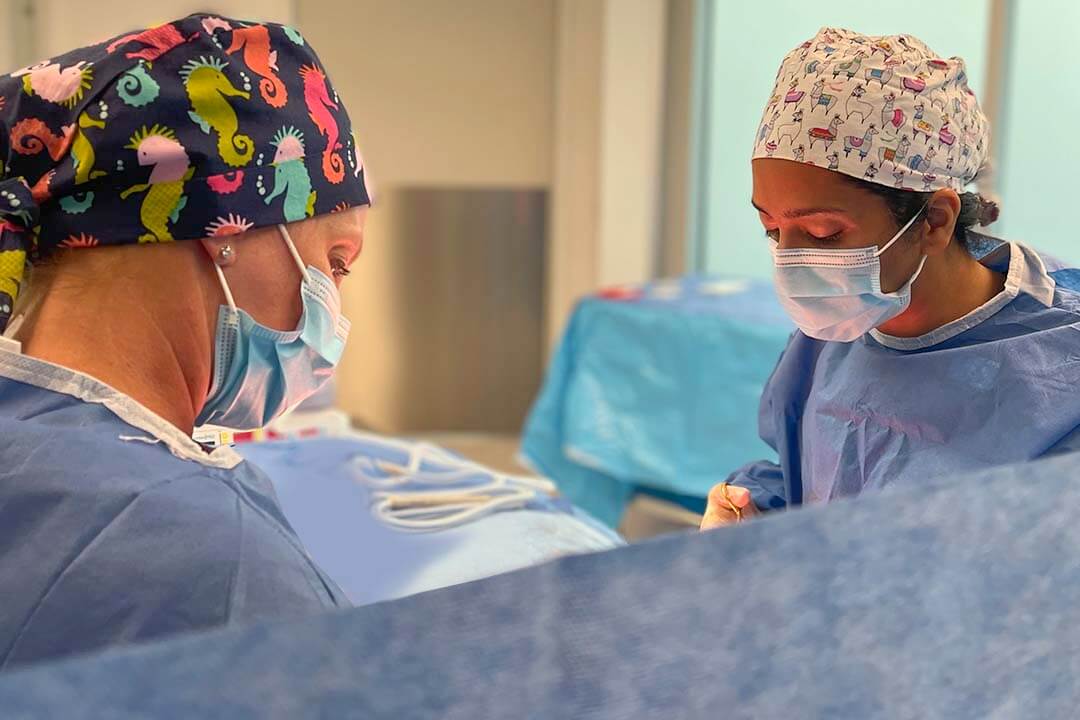
When you have a breast lift and implants placed at the same time, a procedure called mastopexy augmentation, the implants are almost always placed under the muscle in our practice. The reason is structural: we are building a new, higher foundation for your breast tissue and nipple, and an under-the-muscle implant provides the most reliable upper pole volume to support that new position where skin and soft tissue have failed.
Because of this, exercise restrictions after breast augmentation with a lift are similar to standard UTM guidelines, but I want you to take them seriously. We do a total submuscular technique in our practice specifically to protect your results. After that, it is in your hands.
After your six-week acute recovery period, here is what I recommend:
- No isolated chest exercises. Skip the chest press and chest flys entirely.
- Avoid pulling movements that load the shoulder girdle and pec together: pull-ups, chin-ups, and dips all fall into this category.
- Modify push-ups to a tricep push-up position, just as described above for standard UTM patients.
Every time your pec major contracts, it pushes the implant downward and outward. With a lift, that means your newly positioned breast tissue and nipple are at risk of shifting with it. Protecting your outcome here is especially important because revision after a lift with implants is complex.
If chest training is a big part of your life and you are considering a mastopexy augmentation, please bring this up in your consultation. There may be options worth discussing before you commit to a surgical plan.
Exercise After Preservé by Motiva Implants: The Freedom Option
Preservé by Motiva is a technique I am excited to offer my patients, and for active women, it is worth understanding. With the Preservé technique, implants are placed above the muscle, which means the same liberating exercise profile as other OTM placements.
After a recovery period of just two weeks in my practice, there are no exercise restrictions. That means:
- Pull-ups and chin-ups: go for it.
- Chest press and chest exercises: no problem.
- Push-ups without modification: absolutely.
- Weightlifting, strength training, calisthenics, Pilates: all of it.
- No tricep push-up modifications required.
For my gym-focused patients who want a natural look and feel with maximum physical freedom, Preservé by Motiva is a conversation worth having.


Have the Exercise Conversation Before Your Surgery
Exercise after breast implants does not have to be a mystery or a compromise, as long as you are having the right conversation with your board-certified plastic surgeon before you book your surgery. Your workout life matters, and not just for the way it makes you look. Your mental health and physical health are part of the picture.
This is something I feel strongly about, and here is why. Research is increasingly showing that your muscles are not just for lifting heavy things. They are one of the most powerful protective forces for your brain. When you strength train, your muscle cells release a protein called BDNF, or Brain-Derived Neurotrophic Factor, which creates what scientists call a muscle-brain axis. For my patients, that means three things worth knowing:
- Your brain needs your muscles. Every time you lift weights or strength train, your muscles release BDNF, a protein that protects your brain cells, supports memory, and has been linked to a lower risk of Alzheimer’s disease and cognitive decline. The stronger you are, the sharper you stay.
- Strong muscles keep you moving for life. BDNF also protects the connection between your nerves and muscles. Think of it as the communication line that keeps your body responding the way you want it to. Keeping that connection strong is what helps you stay active, mobile, and independent as you get older.
- Muscle mass is literally life-extending. Research shows that people with higher muscle mass live longer, plain and simple. Building strength now is one of the most powerful investments you can make in your future health, and it has nothing to do with how you look in a mirror.
This is why, as your healthcare team, we are genuinely invested in helping you keep training. Getting breast implants should never be the reason you stop building strength. For women especially, muscle is the key to staying sharp, staying independent, and protecting your brain for the long haul.
We want to help you get there. Whether you are considering breast augmentation, a lift with implants, or exploring options like Preserve by Motiva in the Raleigh, NC area, let’s build a surgical plan that works with your lifestyle, not against it.
Come talk to us before you book, because the right plan starts with the right conversation. (919) 797-0996.